

BDSM, Fetish & Kink
BDSM stands for bondage and discipline, dominance and submission, sadism and masochism: consensual play built on a power imbalance agreed in advance. Kink is the wider term for any preference outside the norm, and a fetish is its narrowest form. The 3 overlap, and consent with a safeword turns the power imbalance into play that both men control. Bondage, SM, dominance, roleplay and fetishes each follow their own rules, and a first session comes together in 3 steps. Alongside them are the BDSM stories that men from the gay community tell on Tom Rocket’s Gay Blog.
The basic terms for getting started are explained in the BDSM basics. Deeper dives wait in dominance and submission, fetishes and kinks, bondage and restraint games, sadomasochism between pain and pleasure and roleplay. What a session feels like from the inside is told in the testimonials.
Subscribe to new posts in this category

Spanking Positions for Newbies and the Curious

Bruno
30.12.2024

Using Bondage Tape as a Sex Toy for Restraint Play
Bruno
28.12.2024

Cock and Ball Torture (CBT): A Guide for the BDSM Scene
Bruno
25.12.2024

What Is a BDSM Sub, and What Types Are There?

Gally
17.12.2024
How to Explore Erotic Spanking: Techniques and Safety
Gally
12.12.2024

Understanding Coprophilia, From the Turn-On to the Risk
Bruno
04.12.2024

The Different Types of BDSM Doms and How to Find Yours

Roxxy
02.12.2024

The Erotic Allure of the Smoking Fetish
Roxxy
28.11.2024

The BDSM Collar and the Ring of O: Meaning and Safety
Gally
26.11.2024

Exploring the Exciting World of Pony Play
Bruno
17.11.2024
14 Exciting Bondage Positions for Gays
Gally
14.11.2024
Vore Fetish: What It Means and Which Types Exist
Roxxy
11.11.2024

What Is a Soft Dom? Gentle Dominance Explained
Roxxy
27.10.2024
The 7 Most Common BDSM Myths and Clichés
Roxxy
21.10.2024

How Nipple Clamps Turn Pain Into Pleasure

R.O.B.
19.10.2024
BDSM, fetish and kink: how the three fit together
BDSM, fetish and kink sit inside each other like 3 rings. Kink is the widest of them and covers any sexual preference outside the norm. BDSM is one form of kink. A fetish is the narrowest form.
Kink originally meant a bend or a twist. In a sexual sense it means a departure from the straight line, the counterpart to vanilla. Where the line falls depends on your own scene. Anal sex counts as kinky among straight people. In the gay scene it is standard.
Necessity is what separates kink from fetish. With a kink you enjoy the practice, and other routes work just as well. With a fetish, living it out is a prerequisite for arousal. A foot fetishist has to touch his partner’s feet; where the feet are merely a highlight, kink is the better word. Fetish vs. kink draws the line in detail, and what kinks are puts the term in context. The world of fetish runs through the play styles, while kink-shaming explains why the scene treats put-downs as taboo.
The four pillars behind the acronym
BDSM covers four main areas of practice, spread across 3 word pairs. The areas bleed into one another, and a clean split rarely works.
Bondage covers every restraint practice that takes away freedom of movement. Discipline means punishing for mutual pleasure, by hand or through rules. Dominance and submission form the psychological side: the dom takes control, the sub hands it over. Sadism and masochism put the erotic pull of pain up front. The difference from discipline lies in the purpose: in discipline, pain is only a means to an end.
Research on the field goes back to the late 19th century. The sexologist Richard von Krafft-Ebing studied the appeal of the power imbalance at the time. The term masochism traces back to the writer Leopold von Sacher-Masoch. What BDSM is walks through all four pillars. Top, bottom or vers covers the basic vocabulary of the gay scene, while sadist and masochist describe the two sides of pain play.
Consent in BDSM: SSC, RACK, PRICK and FRIES
Consent in BDSM comes in 4 named frameworks. SSC stands for Safe, Sane and Consensual. RACK means Risk Aware Consensual Kink. PRICK stands for Personal Responsibility, Informed, Consensual and Kink. FRIES stands for Freely given, Reversible, Informed, Enthusiastic and Specific.
SSC is the best-known framework and the usual starting point for beginners. RACK is the risk-aware development of SSC and speaks to anyone who plays with risk on purpose. PRICK puts personal responsibility front and centre. You answer for what you do and for what you ask of your partner. FRIES calls for regular conversations about consent. Agreement stays specific rather than turning into blanket permission.
Beyond those frameworks, the scene follows one broader principle of acceptance: other people’s preferences are fine even if they leave you cold. Two concepts go further. In total power exchange the imbalance extends into daily life. Consensual non-consent (CNC) is the play style built on permission granted in advance. The BDSM principles put all the frameworks side by side, and RACK takes the risk model on its own.
Safeword and traffic light system: the emergency exit of every session
The safeword is a word agreed in advance that ends a BDSM session at once. It mainly protects the sub, but the dom can use it too. Partners agree on one before the session, all the more so with a new partner or a new practice.
Good safewords are nouns far removed from the play: kitchen roll, notepad, remote control. The traffic light system splits feedback into 3 levels. Red ends the scene on the spot. Yellow means slow down and pulls the intensity back. Green signals that everything is fine, and it usually comes only when asked for.
As soon as a gag is involved, the scene needs an extra signal. Common ones are an object the sub drops or an agreed tapping pattern. A dominant who turns down a safeword gives you a reason to walk. The safeword guide explains how to pick and use yours.
Setting hard limits and soft limits
Limits mark out the frame a session takes place in. BDSM distinguishes 2 kinds of limits. Hard limits are the untouchable taboos. Soft limits can be explored carefully over time.
Hard limits differ from person to person. For one man restraint is the taboo, for the next it is pain. If someone pushes at your hard limits, look for another partner. Talking someone out of a hard limit counts as a warning sign in itself. Soft limits cover experiences that are still ahead of you, and they widen step by step.
One widespread misconception concerns the direction: supposedly only bottoms set limits. In truth tops hold taboos of their own, and they carry the same weight. Limits and boundaries in BDSM sorts both kinds, and expressing your BDSM wishes supplies the conversational tools.
BDSM roles: the top side, the bottom side and the switch
Around 40 BDSM roles circulate in the scene, split into 2 camps. Top roles take control by agreement, while bottom roles give it up. A switch enjoys both sides.
Top and dom serve as the umbrella terms on the top side, plus master, sadist, rigger, brat tamer, daddy, handler and trainer. Each differs in motivation and behaviour. On the other side stand sub, bottom, servant, masochist and the roles from pet play. Care for the sub’s wellbeing rests with the dominant side. That makes the top role harder than it looks.
For a start the basic split is enough. Dom and sub explains how the two roles interact. The role overview describes them one by one. Anyone moving between the sides finds himself in the switch. The guide to sub types sorts the variants on the submissive side, and the soft dom describes a particularly nurturing style of dominance.
Bondage: restraint as its own play style
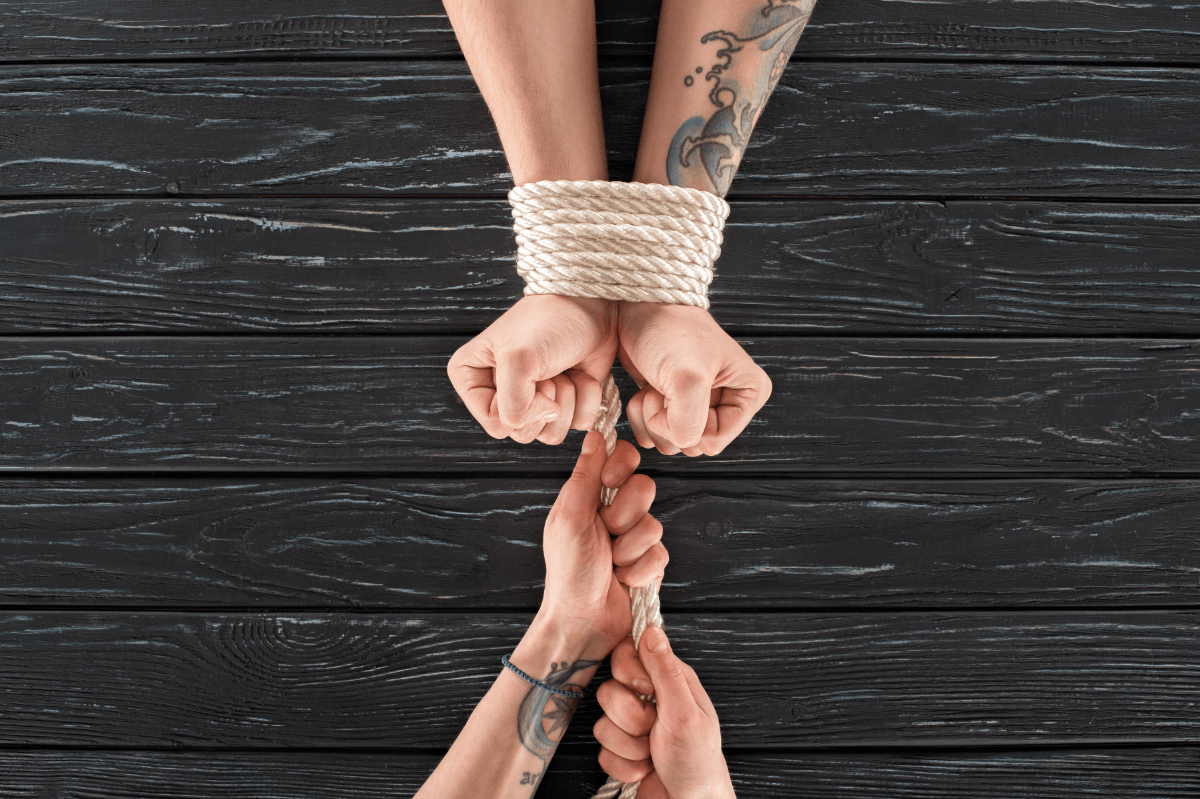
Bondage is the BDSM practice of restraining a partner to limit his freedom of movement. The restraint itself is part of the turn-on. Materials range from rope and wrist cuffs to handcuffs, tape and spreader bars. Restraint by command alone belongs here too.
Rope bondage is the artful variant, and its best-known form is shibari. It grew out of the Japanese military technique hojojutsu, and in Japan the same practice is usually called kinbaku. Whatever technique you use, circulation is what you need to watch. The rope holds firm and still leaves room. Beginners start with wrists and ankles, and bigger patterns come later.
Everything about restraint is deepened in bondage and restraint games: what bondage is supplies the groundwork, the knots for beginners the first instructions. 14 bondage positions for gays show the range, self-bondage the solo variant along with its risks, shibari the Japanese rope art.
Sadomasochism: pain that turns into pleasure
Sadomasochism (SM) uses pain as a source of stimulation. The roles fall on 2 sides: the sadist takes pleasure in giving, the masochist in receiving. Inside the body, endorphins and adrenaline work together.
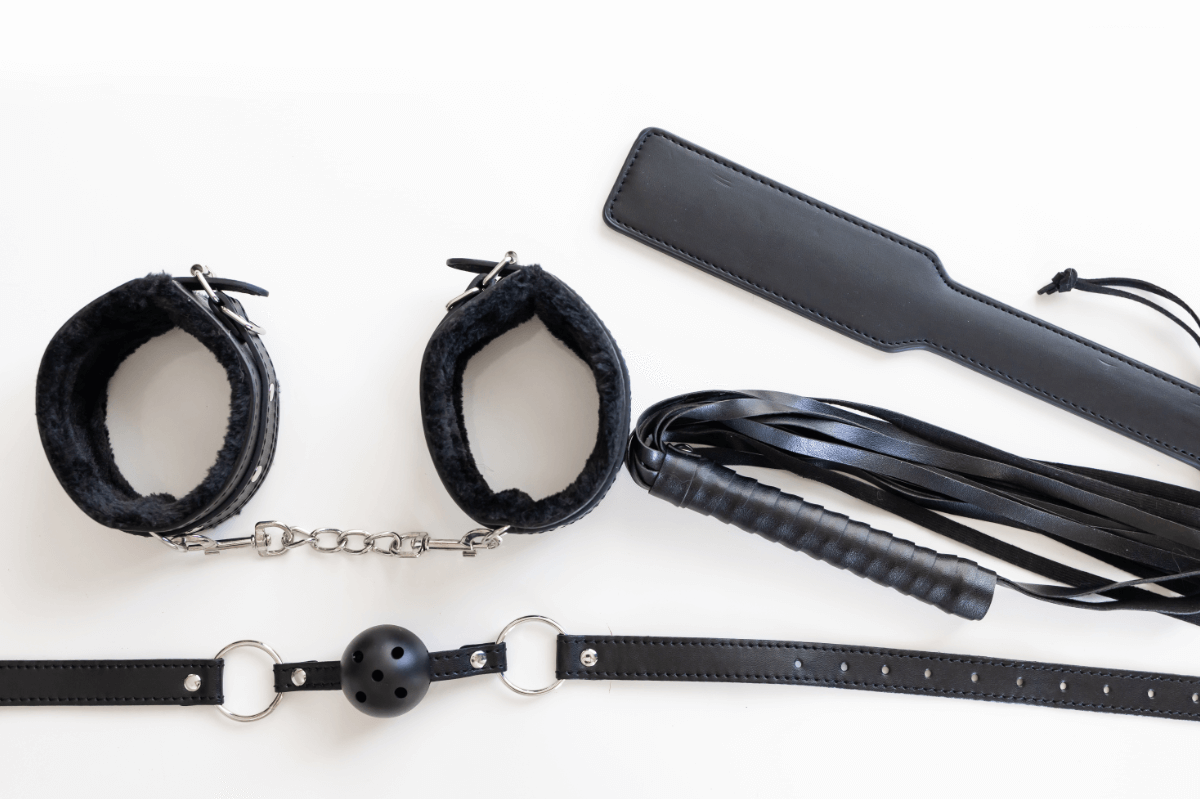
Sensation depends on the tool. Broad implements such as the open hand, a paddle or a flogger land with a dull thud. Narrow tools such as a cane, a riding crop or a belt deliver a sharper sting. The bottom ideally stays relaxed, and the intensity climbs slowly. The top reads the reactions and matches his strikes to them.
How pain turns into pleasure is deepened in SM between pain and pleasure. Impact play sorts spanking, flogging, caning and whipping, spanking positions the postures that suit them. Two classic ways to turn up the intensity are nipple play and cock and ball torture.
Dominance and submission: from one evening to daily life
Power exchange in BDSM runs on 2 timescales. A session keeps the imbalance to a few hours. A 24/7 dynamic moves it into daily life. Both forms rest on a clear agreement.
Inside the dynamic, 4 forms have become established. Chastity hands over control of your own orgasm. Findom moves the power play onto money. A collar makes the roles visible. In the scene it carries real weight as a symbol. The most intense form is total power exchange, where responsibility changes hands for good.
Chastity, findom and the collar all come up in dominance and submission. The role of the servant describes the submissive side, BDSM master and slave the demanding one. Orgasm control leads to chastity belts and forced ejaculation, the financial variant to findom. What a collar means in the scene, and when it gets handed over, is explained in its own guide.
Roleplay and psychological games
Roleplay is a BDSM practice where you take on someone else’s identity for a limited time. What matters is playing the role convincingly; the outfit alone rarely sustains a scene. It usually plays out between 2 people, though group scenes work too.
Classic scenarios are police officer and suspect, doctor and patient, teacher and pupil. Pet play moves the role into the animal world, most often as a puppy, a pony or a pig. Fear play uses controlled fear as a stimulus. In any head game, the line falls where fantasy tips into real distress.
More scenarios and their rules are deepened in roleplay and psychological games. Roleplay in bed is the place to start, doctor sex a worked-out scenario. Pet play and pony play lead into the animal world, while fear play and edge play head for the psychological edge.
Fetishes and kinks: what the scene actually does
Fetishes focus on materials, body parts or objects. Three are classics in the gay scene: feet, leather and materials such as latex, rubber or neoprene. Uniforms and the smell of worn clothing are widespread as well.
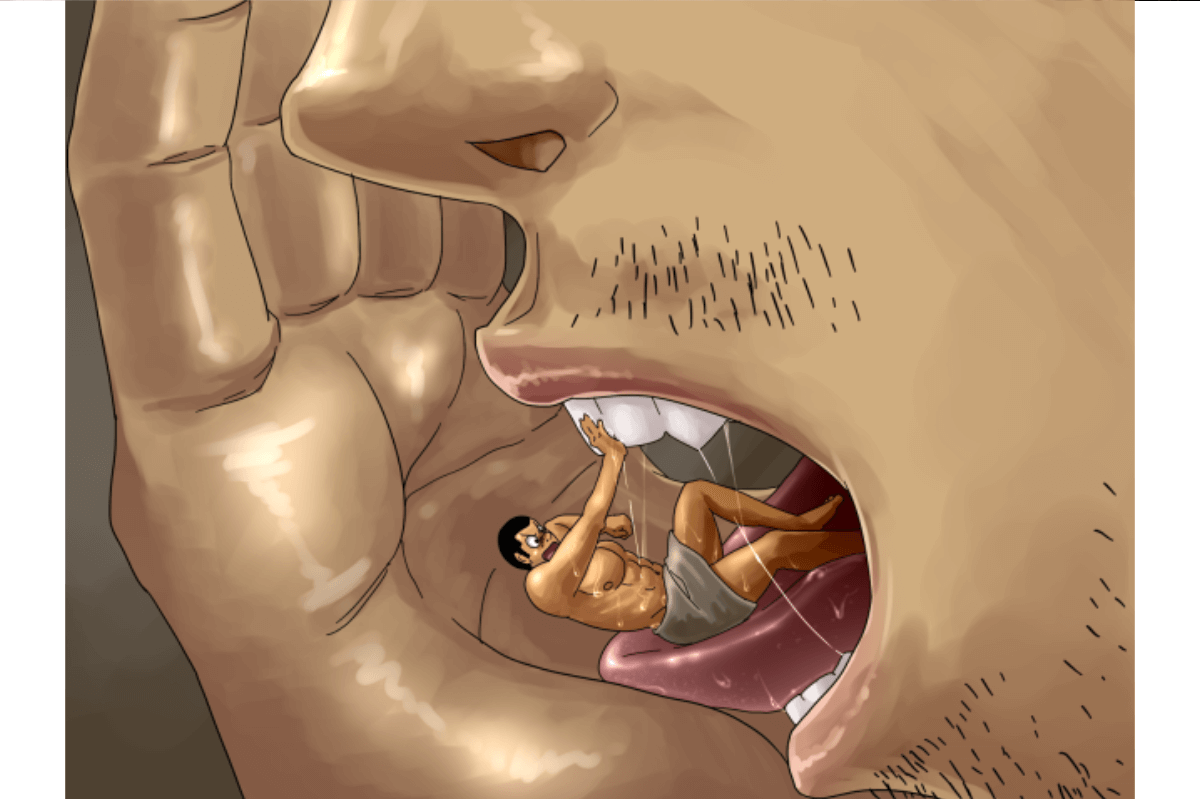
Material fetishes stand out in the gay scene because leather and rubber shape entire dress codes. Other preferences sit further out. With coprophilia the health risk dominates, and vore mostly stays a fantasy. More common are piss play and sissification, which uses feminisation as part of the power dynamic.
The individual preferences are deepened in fetishes and kinks. The classic is the foot fetish, joined by latex as a second skin, piss play and sissification. Coprophilia spells out the risks.
Getting started: planning your first BDSM session
Getting into BDSM takes 3 steps: talk, agree a safeword, start with one practice. The order is fixed. Tools come into play after that.
One rule of thumb from the scene applies to the talk beforehand: 10 taboos too many beat one too few. A surplus is easy to trim down together later. A blind spot can blow up in the middle of a scene. Light restraint, soft spanking or a game with words all work as the first practice. More important than any toy is the trust between you.
The first time playing BDSM walks through it step by step. Couples find their route in BDSM for couples, singles in staying safe on a BDSM date. Anyone who wants to sort out the terms first starts with the BDSM basics. How a first session went for other men is told in the testimonials.
Aftercare, drop and what comes after
Aftercare is the care that follows a BDSM session. It brings both sides back into daily life, and check-ins can carry on for days. The drop is an emotional crash that can hit at once or days to weeks later.
Aftercare covers closeness, a blanket, water and a conversation about what happened. A question about how someone feels marks the way out of the scene and back into everyday life. Subspace is a trance-like state that intense play triggers. Coming back from it takes more time.
Drops hit both sides, the sub more often. Triggers are a hormone crash, vague agreements beforehand or scant aftercare. For the dom, shame and guilt come on top. Why aftercare matters explains the practice, the dom drop the causes and the remedies. The trance state itself is described in subspace in BDSM.
Red flags: spotting an unsafe play partner
Red flags are the warning signs that mark an unsafe play partner. Most of them show up while you are still getting to know each other. Four carry the most weight.
Top of the list is a refused safeword, because it takes away your emergency exit. A role someone hands you before you agreed to it weighs almost as much, and it often turns up in the very first message. The third sign is a partner who stays vague about his own limits: it means he has thought little about the subject. The fourth is playing under the influence, because substances cloud judgement. When the dominant is the unsafe one, the German-speaking scene calls him a Dummdom, literally a stupid dom.
Refused safewords, assigned roles, vague limits and substances are the early signs; the full list is in the warning signals in BDSM. Each side gets its own view in red flags with subs and red flags for subs dealing with doms. Why substances and play go badly together is set out in BDSM and drugs.
Common questions about BDSM, fetish and kink
What does the abbreviation BDSM stand for?
BDSM stands for bondage and discipline, dominance and submission, sadism and masochism. The 3 word pairs describe 4 areas of practice: restraint, discipline, power exchange and pain play. All of them rest on a power imbalance agreed beforehand. The pairs overlap in practice, so a scene rarely sits inside only one of them.
What is the difference between kink and fetish in BDSM?
Kink is the umbrella term for sexual preferences outside the norm, and a fetish is the narrower form of it. The deciding factor is necessity: with a fetish, living it out is a prerequisite for arousal; with a kink it is one highlight among several. BDSM itself is one form of kink.
How does a safeword work in BDSM?
A safeword is agreed before the session and ends it at once. Everyday words far removed from the play work best. The traffic light system is widespread, with 3 levels: red stops, yellow pulls the intensity back, green confirms. With a gag in play a signal replaces the word, such as a dropped object.
Which fetishes are common among gay men?
Three are classics of the gay scene: the foot fetish, the leather fetish and material fetishes with latex, rubber or neoprene. Uniforms, the smell of worn clothing, watersports and sissification are widespread as well. The line to kink stays fluid: the same preference is a condition for one man and only a highlight for the next.
What is tunnel play in BDSM?
Tunnel play covers BDSM practices that run to the end once they start. The tools are substances with a warming, numbing or cooling effect, and their effect wears off only over time. Figging with ginger and balms on the skin are the common ones. The appeal is that once it starts, you ride it out.