

☆ Prefer the Gay Blog on Google
Table of Contents
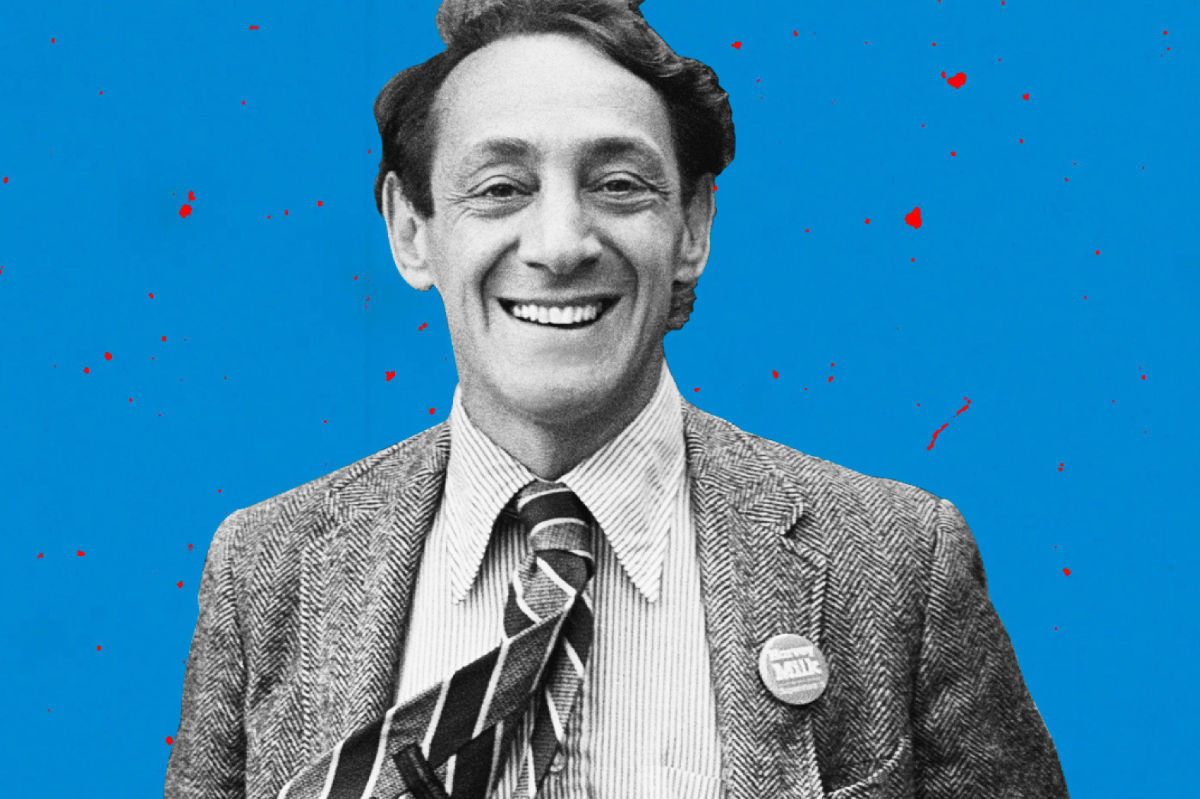
Harvey Milk Day is observed every year on May 22 – the birthday of Harvey Milk, the first openly gay politician elected to public office in California. From the very beginning, this day has stood for something bigger than a single person: the right to be visible, the necessity of political representation, and the lasting courage it takes to live openly in a world that long refused to accept it.
For gay men, queer communities, and everyone with an interest in LGBTQ+ history, Harvey Milk Day is more than a memorial. It is an invitation to know your own history, to celebrate it, and to carry it forward.
Who Was Harvey Milk – and Why Does He Still Matter?
Harvey Milk was born on May 22, 1930, in Woodmere, New York. He served in the US Navy, worked as a teacher, and in the early 1970s relocated to San Francisco – to the Castro District, which was then emerging as the beating heart of a new gay urban culture. There he opened a camera shop that quickly became an informal gathering place for the growing community around him.
Milk ran for office several times before winning a seat on the San Francisco Board of Supervisors in 1977. With that election, he became the first openly gay city supervisor of a major American city. The significance of that moment stretched far beyond San Francisco. For countless gay men and queer people around the world who had never imagined one of their own could hold public office, it was proof that something had shifted.
Milk used his position actively and ambitiously. He pushed through a citywide anti-discrimination ordinance that explicitly protected people based on sexual orientation. He defeated the Briggs Initiative, a statewide ballot measure that would have banned gay and lesbian teachers from working in California public schools. At the same time, he fought for affordable housing, childcare, and public safety – issues that mattered to all his constituents, not only the queer ones.
His time in office lasted less than a year. On November 27, 1978, Harvey Milk was shot and killed inside City Hall by former supervisor Dan White, who also murdered Mayor George Moscone that same day. The grief was immediate and immense. That night, tens of thousands of people walked silently through the streets of San Francisco holding candles, the rainbow flag catching the cold November air.
The Origins and Official Recognition of Harvey Milk Day
The push for an official day of remembrance grew steadily over the decades following Milk’s assassination. A central force behind it was the Harvey Milk Foundation, co-founded by his nephew Stuart Milk and his former campaign manager Anne Kronenberg. Their mission was to keep Milk’s vision of dignity, equality, and representation alive and active.
In 2009, California Governor Arnold Schwarzenegger – who had vetoed the same legislation the year before – signed a bill officially establishing Harvey Milk Day as a Day of Special Significance in California, observed on May 22. Public schools across the state were encouraged to mark the day with programs focused on Milk’s life and legacy. In 2022, Governor Gavin Newsom renewed the proclamation, reaffirming its importance.
Today, the occasion is observed far beyond California. LGBTQ+ organizations, community centers, schools, and cultural institutions in many countries mark the day with events, screenings, discussions, and public ceremonies. In West Hollywood, the city hosts an annual celebration that has grown into a cornerstone of the local pride season. This year’s event, on May 22, 2026, carries a nautical theme – a direct response to the Trump administration’s 2025 decision to rename the US Navy ship previously christened the USNS Harvey Milk.
That renaming provoked immediate backlash. For many in the community, it was a reminder that symbolic recognition matters, and that it can be taken away. West Hollywood’s decision to lean into the naval history rather than ignore it is exactly the kind of defiant, creative response Milk himself would likely have appreciated.
Visibility as Political Action – Milk’s Message in the Present Tense
Harvey Milk believed, with real conviction, that coming out was a political act. He called on gay men, lesbians, and queer people publicly and repeatedly to make themselves known – not as a performance, but as a strategy. His logic was direct: once you are visible, you cannot be as easily erased, ignored, or legislated against.
His famous Hope Speech – first delivered as a campaign address, then expanded at the San Francisco Gay Freedom Day Parade in 1978 – remains one of the most powerful statements of the American civil rights movement. At its core was a simple but radical idea: people need hope, and hope requires seeing someone like yourself exist, fight, and win.
That message has lost none of its weight. In many countries, LGBTQ+ rights remain legally unprotected. In others, hard-won protections are being dismantled. Queer visibility is under pressure in classrooms, in legislatures, and in public spaces in ways that would have felt familiar to Milk. The renaming of a Navy ship, the rollback of anti-discrimination policies, the banning of drag performances – these are not abstract political debates. They are direct attacks on the visibility Milk gave his life to assert.
For gay men growing up in communities where openness still carries real risk, Milk’s story carries a particular force. The fact that someone with his contradictions and setbacks, someone who failed repeatedly before succeeding, became a historical figure is itself a form of encouragement. Not a clean story, but a true one.
The Castro District – Sex, Community, and Queer Identity
The Castro District in 1970s San Francisco was more than a neighborhood. It was an experiment in queer life: a place where gay men could walk down the street without pretending, where bars, bathhouses, bookstores, and community centers created a dense ecosystem of belonging. It was loud, sexual, political, and unapologetically itself.
Harvey Milk was deeply embedded in that culture, and he shaped it in return. Castro Camera was not just a shop; it was a space where people came to talk, to organize, to ask for help, or simply to exist around others like themselves. Milk understood that political power grows from physical community, and that visibility starts with the ability to occupy space freely.
The Castro’s energy was also openly erotic. Gay men there were not expected to hide their desire or tone down their bodies. Leather bars, cruising spots, backrooms, and a frank sexual culture were part of a life that deliberately refused the respectability demanded by mainstream society. Milk himself was no prude. He understood queer freedom as something that encompassed the whole person – the political body and the sexual one together.
This connection between desire, identity, and political resistance is central to LGBTQ+ history. It is a reminder that the liberation movements of the 1970s were not strong in spite of their sexual openness – they were strong in part because of it.
Harvey Milk in Film, Art, and Popular Culture
Milk’s legacy lives not only in law and commemoration but in art. In 1984, the documentary The Times of Harvey Milk by Robert Epstein won the Academy Award for Best Documentary Feature. In 2008, Gus Van Sant’s biographical drama Milk, with Sean Penn in the title role, received eight Oscar nominations and won two, including Best Actor. The film brought Milk’s story to a generation with no direct memory of him.
Beyond cinema, his life has been the subject of operas, plays, novels, and musical works. A US postage stamp was issued in his honor. President Barack Obama posthumously awarded him the Presidential Medal of Freedom in 2009. A terminal at San Francisco International Airport bears his name, as does a high school in the Castro District.
Milk had a natural talent for symbolism and communication. He recorded multiple audio messages to be opened in the event of his assassination. One of them contained the words: “If a bullet should enter my brain, let that bullet destroy every closet door.” That sentence has become one of the most quoted lines in queer history – and one of the most quietly devastating.
Harvey Milk Day in 2026 – History Under Pressure
Asking what Harvey Milk would make of the present moment is not an academic exercise. His core concerns – protection from discrimination, visible representation, the right to a public life – are being actively contested right now. The 2025 renaming of the Navy ship that bore his name was only the most recent example of how his legacy remains politically charged territory.
The Harvey Milk Foundation continues to work internationally, partnering with UN bodies and civil society organizations to advocate for LGBTQ+ rights in countries where coming out remains dangerous. Stuart Milk travels widely, keeping his uncle’s legacy alive not as a museum piece but as a living framework for activism.
For gay men and queer communities marking this year’s Harvey Milk Day, the occasion is an opportunity to take stock. What has been achieved – marriage equality, adoption rights, anti-discrimination protections in employment and housing – represents decades of work. What is now under threat makes it clear that none of those gains are permanent without continued attention and resistance.
Harvey Milk Day on May 22 is, above all, an invitation to remember where we came from, to understand how fragile progress can be, and to decide again – each year – to be visible anyway.