

Table of Contents
For decades, World AIDS Day on 1 December has been a global symbol of solidarity, education and social cohesion. It serves as a reminder that people with HIV and AIDS should be treated with respect, protected, provided with medical care, allowed to participate in society and free from discrimination. At the same time, the day raises awareness that the global HIV epidemic has not yet been overcome – even though medical advances today can enable people with HIV to live long, healthy and self-determined lives.
The theme of this year’s World AIDS Day is ‘Overcoming disruptions, transforming the AIDS response’.
World AIDS Day was introduced in 1988, making it one of the oldest global health days in the world. Every year, international organisations, activists, communities, medical professionals, schools, the media and political institutions dedicate themselves to this date. The focus is on education, prevention, destigmatisation and social support for all people living with or affected by HIV.
World AIDS Day: What this day means
World AIDS Day has three key objectives:
- Show solidarity – with people living with HIV, their partners, families and communities.
- Break down discrimination – because stigmatisation continues to be a major barrier to testing, treatment and participation.
- Promote education – so that people can make informed decisions about protection, diagnosis and treatment.
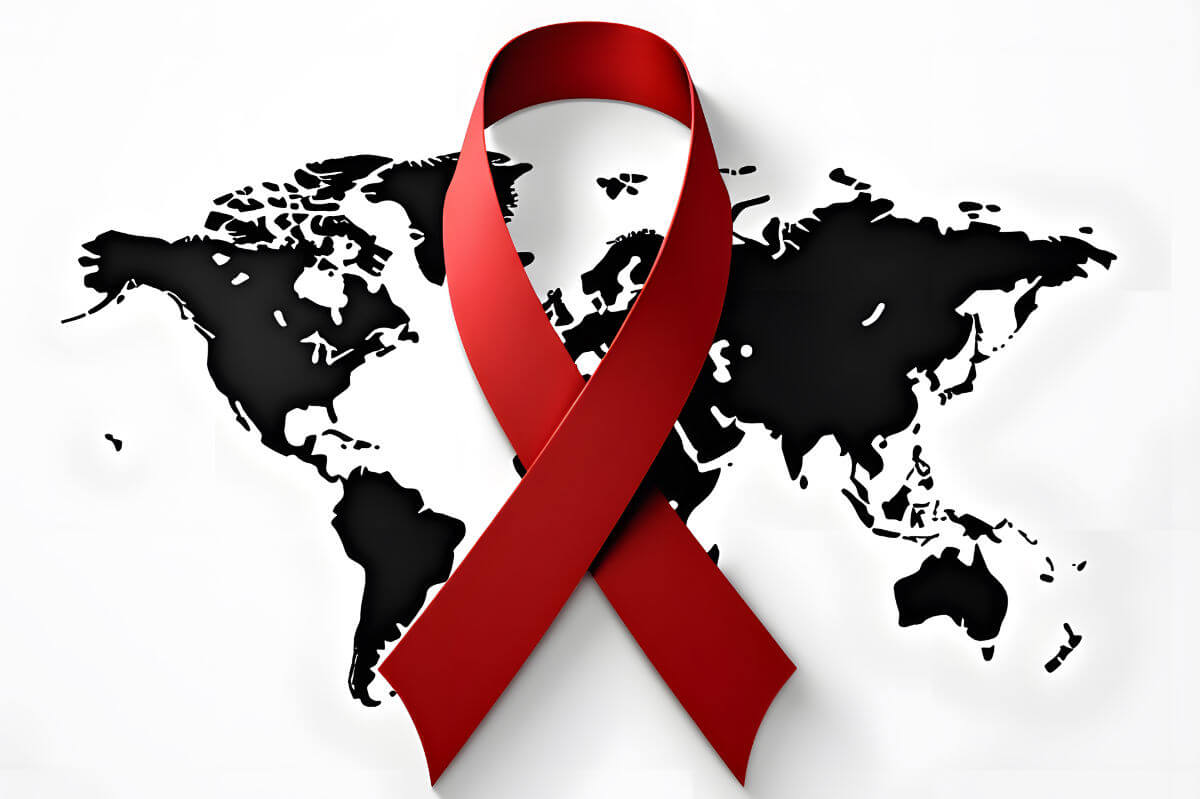
Since the 1990s, the red ribbon has been the international symbol of support. It serves as a reminder that HIV is not a moral judgement, but a chronic infection that does not exclude or define anyone.
Why World AIDS Day is still relevant today
Even though effective drugs are available today, major inequalities continue to exist worldwide. World AIDS Day highlights the fact that the progress made in recent decades has not reached everyone – especially in regions with limited resources or among marginalised groups that experience social or structural barriers.
According to UNAIDS, around 39 million people worldwide are living with HIV. Many do not receive regular medical care, are socially excluded or do not have access to safe healthcare systems. Even in countries with high-quality care, people with HIV often experience prejudice, ignorance and discriminatory language.
That is why World AIDS Day remains an important moment to highlight injustices, empower people and promote political change.
Important facts about HIV and AIDS
For World AIDS Day to have a long-term impact, up-to-date and factual information is crucial. The most important points:
1. HIV is treatable
Thanks to antiretroviral therapy (ART), people with HIV can now live long and healthy lives. The drugs reduce the viral load, protect the immune system and enable a high quality of life.
2. U = U (Undetectable = Untransmittable)
People who take HIV medication regularly and whose viral load is undetectable do not transmit HIV during sex. This scientifically proven finding is one of the most important advances of recent decades.
3. AIDS is preventable
AIDS develops when HIV remains untreated. Early diagnosis and treatment can completely prevent AIDS.
4. Prevention has become more diverse
Protective methods today include:
- Condoms
- PrEP (pre-exposure prophylaxis)
- Protection through therapy (U=U)
- Safer use methods
- Protection when planning to have children
5. Discrimination is preventable – and harmful
Stigmatisation leads to people being less likely to get tested, talk less about HIV or seek access to care. Non-discriminatory language and inclusive information are therefore a core concern of World AIDS Day.
World AIDS Day in a social context
World AIDS Day helps the public understand how much social structures play a role. People who experience discrimination – e.g. on the basis of sexual orientation, gender identity, origin, disability, poverty or migration – often have less access to medical care. 1 December raises awareness that inequality is a key factor in the global HIV epidemic.
It also commemorates the historical struggles of the HIV activism movement, which fought for early treatment options, safe research and social recognition. Many of these achievements continue to have an impact today.
Showing solidarity on World AIDS Day
Solidarity means actively contributing to improving health and social participation. Ways to do this include:
- Share knowledge: Replace stigmatising myths with facts.
- Reflect on language: Use respectful, inclusive terms.
- Wear a red ribbon: A visible sign of support.
- Strengthen counselling centres: Through donations or volunteer work.
- Support political initiatives: For fairer health systems and effective prevention work.
- Normalise testing: Through regular health checks that are non-judgmental.
What everyone can do on 1 December
World AIDS Day is a good opportunity to refresh your knowledge or learn something new. Meaningful steps:
- Learn about HIV (e.g. from Deutsche Aidshilfe or UNAIDS)
- Think about non-discriminatory communication
- Offer support to people in your own environment
- Participate in events, memorial marches or online campaigns
- Share posts that raise awareness and break down stereotypes
World AIDS Day: A day of remembrance – and a mission for the future
World AIDS Day commemorates those who have died as a result of AIDS, but it is also a day full of hope. Medical advances, activism and supportive communities have achieved a great deal – but there is still work to be done.
Equitable access to medical care, non-discriminatory information and social support are key building blocks for a future in which HIV is no longer a barrier.
1 December is therefore a day of remembrance, solidarity and action. Because only together can we ensure that no one is disadvantaged because of HIV – not today and not in the future.