

Table of Contents
Fetish fashion is no longer limited to darkrooms or private fetish sessions. In many queer scenes, it has evolved into a visible style that combines eroticism, body awareness, and fashion. Gay men in particular have shaped this aesthetic over decades. Leather, latex, a harness, or a jockstrap can be part of an erotic game – but they can also express identity, style, and community.
Anyone who wears fetish fashion often plays deliberately with glances, fantasies, and roles. Clothing can provoke, seduce, or simply show that sexuality is a natural part of everyday life. Between subtle details and explicit outfits, a style emerges in which fashion and desire merge.
Fetish fashion in the history of queer subcultures
The roots of fetish fashion lie in the development of gay subcultures following the social changes of the 1960s and 1970s. In many cities, bars, clubs, and meeting places emerged where men could live out their sexuality more freely.
Within these spaces, a distinct aesthetic developed. Motorcycle clothing, workwear looks, and military elements were adopted and reinterpreted. Leather jackets, heavy boots, and tight jeans became symbols of a masculine, confident eroticism.
Over time, this scene developed its own stylistic direction. Materials such as latex, rubber, or neoprene expanded the range. The visual language remained similar, however: body-focused, direct, and deliberately erotic.
Today, this aesthetic can be seen at Pride parades, fetish festivals, and clubs around the world.
Fetish fashion as an expression of sexual self-determination
Clothing can be more than just a practical everyday object. It can be a statement about personality, fantasies, or roles. This is exactly where fetish fashion unfolds its special effect.
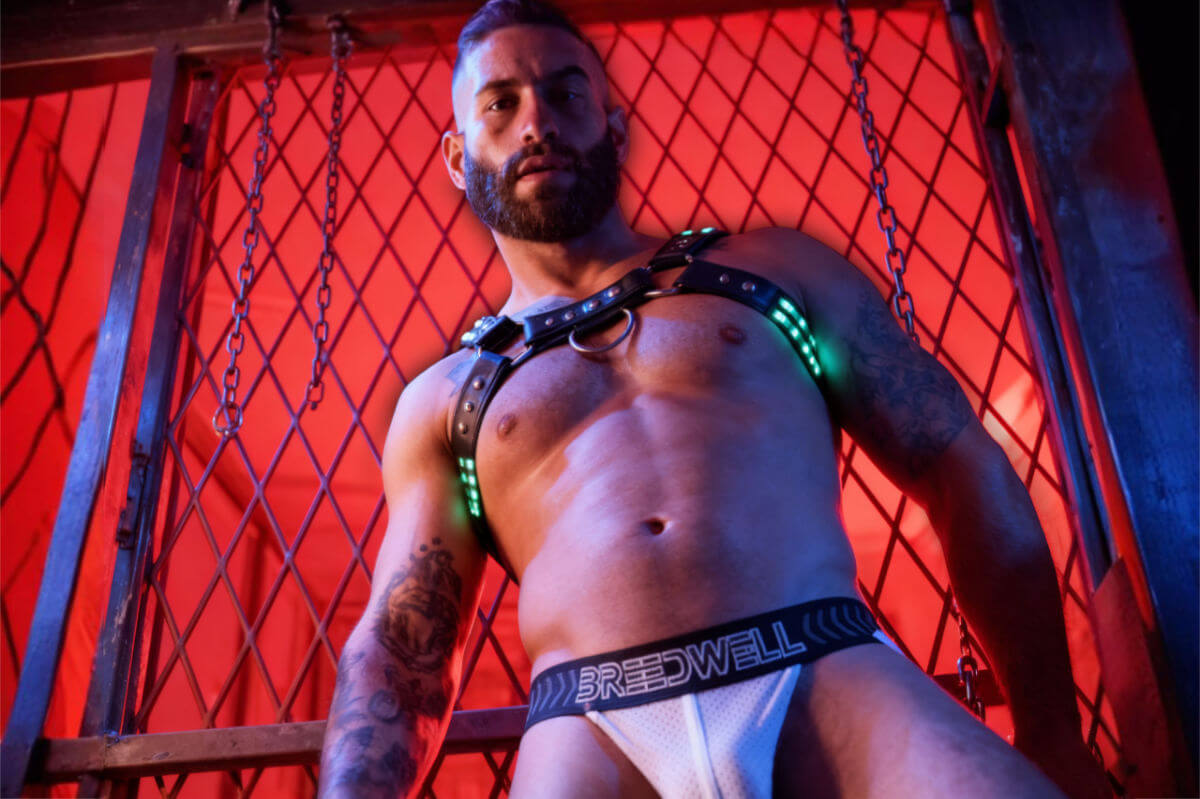
Many outfits deliberately play with power, dominance, or physical desire. A harness can highlight the upper body while conveying a dominant energy. A jockstrap draws attention to the hips and buttocks. Latex fits the body like a second skin and amplifies every movement.
This staging is part of the appeal. It allows eroticism to become visible without a single word being spoken.
Materials that shape fetish fashion
A central element of this style is the materials used. They determine how an outfit appears and what kind of atmosphere it creates.
Leather
Leather is considered a classic element of this scene aesthetic. It appears robust, masculine, and has a long tradition in gay fetish cultures. Leather jackets, harnesses, or pants are therefore particularly common in leather subculture.
Latex
Latex is one of the most striking materials. Its glossy surface creates a very body-hugging look and emphasizes every movement. Many associate latex with intense fantasies or dominant roles.
Mesh and elastic fabrics
Mesh fabrics or elastic materials combine a sporty look with erotic impact. They reveal skin and create a mixture of concealment and exposure.
The combination of such materials makes fetish fashion a visually powerful form of style.
Fetish fashion and the staging of the body
An essential characteristic of fetish fashion is the deliberate emphasis on the body. Many designs are cut in a way that highlights specific areas.
Harnesses draw attention to the chest and shoulders. Tight pants or jockstraps emphasize the hips and buttocks. Mesh fabrics reveal skin and create tension between covering and revealing.
This design deliberately plays with glances and fantasies. Clothing becomes a tool to make eroticism visible.
Wearing fetish fashion in everyday life
Not everyone wants to appear in a full fetish look. Nevertheless, elements of this aesthetic can easily be integrated into everyday outfits.
Biker-style boots, a leather bracelet, or a body-hugging tank top can already create a subtle connection to the scene. A harness worn under an open jacket or shirt can also create a look that feels both stylish and erotic.
In this way, fetish fashion can become part of a personal style without immediately looking like a club outfit.
Fetish fashion as visual communication
In many scenes, clothing functions as a kind of language. Certain details can signal preferences or roles.
Historically, the so-called hanky code is well known. Colored handkerchiefs indicated specific interests. Similar codes still exist today, although in a more subtle form.
Boots, collars, or specific harness designs can be recognized within the scene. Clothing thus becomes a form of nonverbal communication.
Fetish clothing at Pride and scene events
At Pride parades, fetish festivals, or club nights, this style becomes particularly visible. Outfits can be more experimental and explicit than in everyday life.
Harnesses, leather pants, or latex suits are part of the atmosphere at such events. Many people use these occasions to try new looks or make fantasies visible.
These environments show how diverse this fashion can be interpreted. Classic leather aesthetics stand alongside futuristic designs or minimalist outfits.
Developing your own style
Entering this aesthetic world often begins with curiosity. Personal style usually develops step by step.
Start with accessories
A leather bracelet, boots, or a harness can be a good starting point.
Experiment with materials
Leather feels traditional and powerful, while latex appears futuristic and body-focused. Different fabrics create different effects.
Find inspiration
Clubs, Pride events, or community platforms show many ways fetish fashion can be interpreted.
Over time, this can develop into a style that fits your own personality.
Confidence and respect
Anyone who wears fetish fashion often moves between personal expression and public perception. Authenticity plays an important role here.
Many fetish cultures are based on consent, openness, and mutual acceptance. Clothing can be part of this culture when worn consciously.
An outfit feels most convincing when it matches the personality of the person wearing it and is not understood merely as a costume.
Fetish fashion as part of modern queer fashion
In many queer scenes, fetish fashion has developed into an independent form of style. Designers, clubs, and community events reinterpret this aesthetic in new ways.
Harnesses now appear in fashion editorials, leather looks are combined with streetwear, and latex can be found in avant-garde collections.
This development shows how strongly eroticism, fashion, and identity can influence one another.